
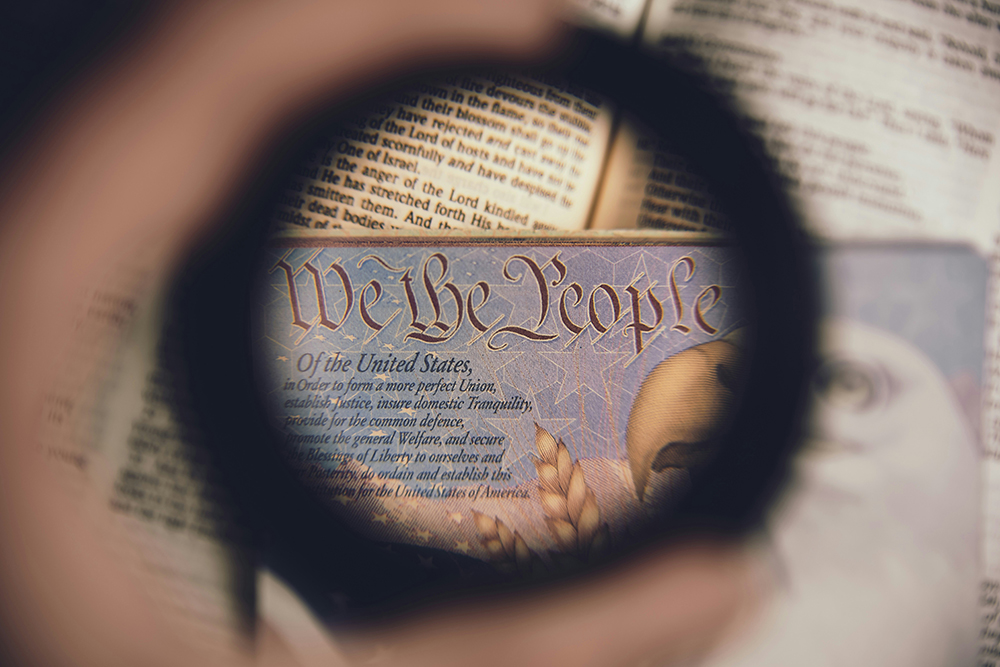
More than two centuries after its signing, the U.S. Constitution continues to shape American government and everyday life. This month’s collection brings together resources that explore the Constitution, the Bill of Rights, and their continuing influence on American society.
Special thanks to our Materials Processing Coordinator, Leah Zande, for compiling the list.
We the Elites: Why the US Constitution Serves the Few
Ovetz, Robert (2022)
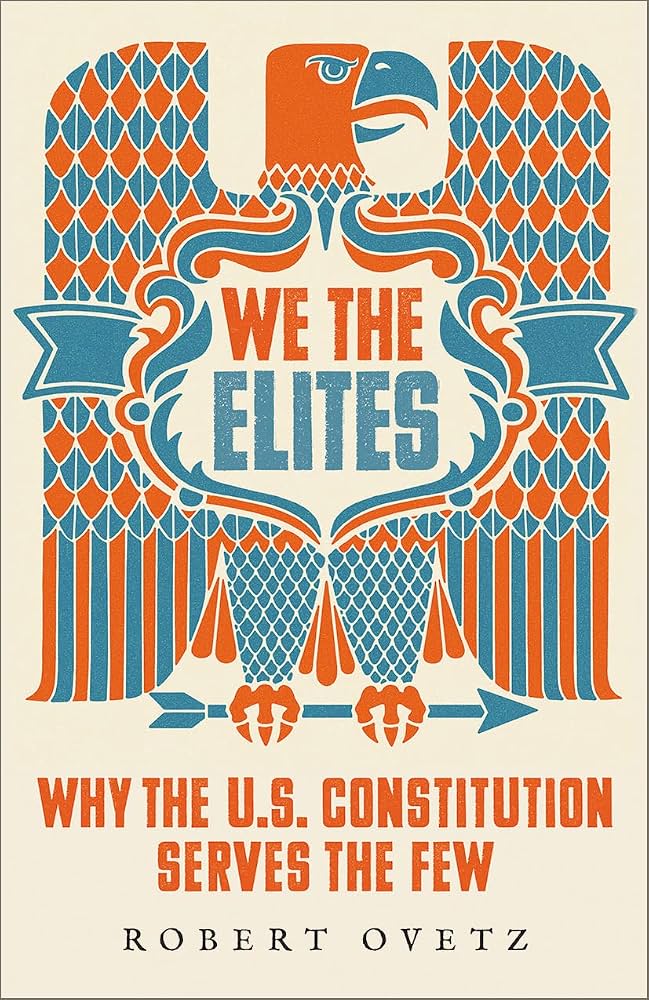 Written by 55 of the richest white men, and signed by only 39 of them, the US constitution is the sacred text of American nationalism. Popular perceptions of it are mired in idolatry, myth and misinformation - many Americans have opinions on the constitution but have little idea what it says.
This book examines the constitution for what it is – a rulebook for elites to protect capitalism from democracy. Social movements have misplaced faith in the constitution as a tool for achieving justice when it actually impedes social change through the many roadblocks and obstructions we call 'checks and balances'. This stymies urgent progress on issues like labour rights, poverty, public health and climate change, propelling the American people and rest of the world towards destruction. Robert Ovetz's reading of the constitution shows that the system isn't broken. Far from it. It works as it was designed to. - Publisher's Description
Request this Title
Keeping the Republic: A Defense of American Constitutionalism
Dennis, Hale; Landy, Marc Karnis (2024)
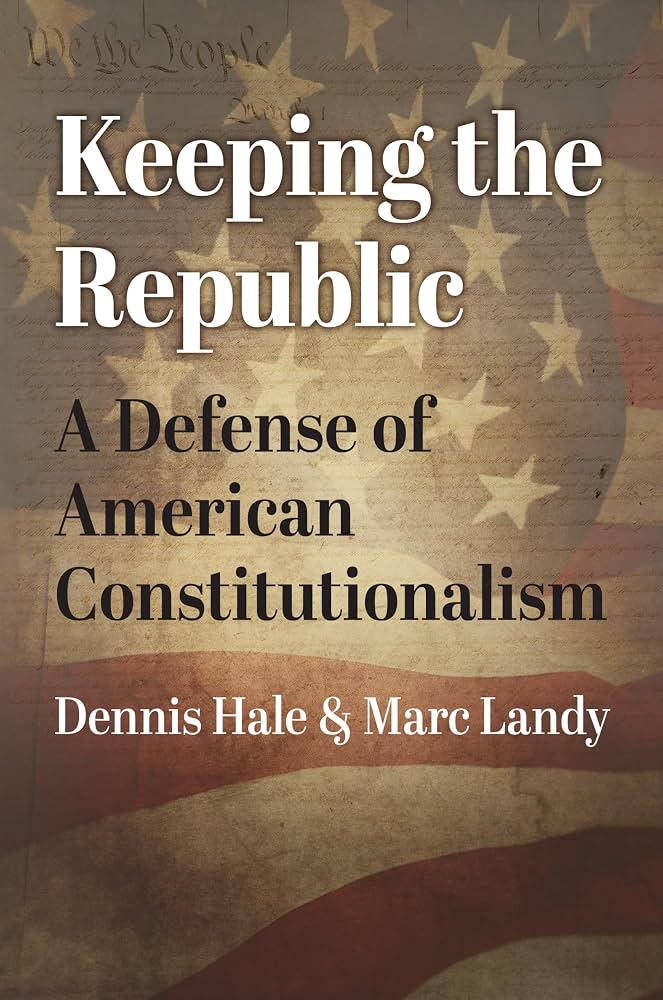 "Keeping the Republic" is an eloquent defense of the American constitutional order and a response to its critics, including those who are estranged from the very idea of a fixed constitution in which “the living are governed by the dead.” Dennis Hale and Marc Landy take seriously the criticisms of the United States Constitution. Before mounting their argument, they present an intellectual history of the key critics, including Thomas Paine, William Lloyd Garrison, Henry David Thoreau, Woodrow Wilson, Robert Dahl, Sanford Levinson, and the authors of "The 1619 Project." Why, they ask, if the constitutional order is so well designed, do so many American citizens have a negative view of the American political order? To address that question, they examine the most crucial episodes in American political development from the Founding to the present.
Hale and Landy frame their defense of the Constitution by understanding America in terms of modernity, where small republics are no longer possible and there is a need to protect the citizens of a massive modern state while still preserving liberty. The Constitution makes large, popular government possible by placing effective limits on the exercise of power. The Constitution forces the people to be governed by the dead, both to pay the debt we owe to those who came before us and to preserve society for generations yet unborn.
The central argument of "Keeping the Republic" is that the Constitution provides for a free government because it places effective limits on the exercise of power—an essential ingredient of any good government, even one that aims to be a popular government. That the people should rule is a given among republicans; that the people can do anything they want is a proposition that no one could accept with their eyes wide open. Thus, the limits that the Constitution places on American political life are not a problem, but a solution to a problem.
Hale and Landy offer both a survey of American anti-constitutionalism and a powerful argument for maintaining the constitutional order of the nation’s Framers. - Publisher's Description
Request this Title
American Factions: How the US Constitution Can End Extreme Partisanship
Huffman, James (2026)
 Americans of all political stripes are becoming increasingly frustrated with the partisanship of present-day politics. Democrats and Republicans alike claim mandates on narrow margins of victory and are quick to condemn their opponents as enemies of the public good. The Framers of the Constitution understood that such divisions are rooted in the political factions inherent in democracy. Their solutions were federalism, the separation of powers, bicameralism, judicial review and other structural constraints on majority rule. Over the course of US history some of those constraints have been eroded as American politics have become more democratic and less respectful of the liberties and freedoms the Framers sought to protect.
"American Factions" advocates for a renewed understanding of the problem of political factions and a restoration of the Constitution's limits to revive a politics of compromise and bipartisanship. - Publisher's Description
Request this Title
Schools for Statesmen: the Divergent Educations of the Constitution's Framers
Browning, Andrew (2022)
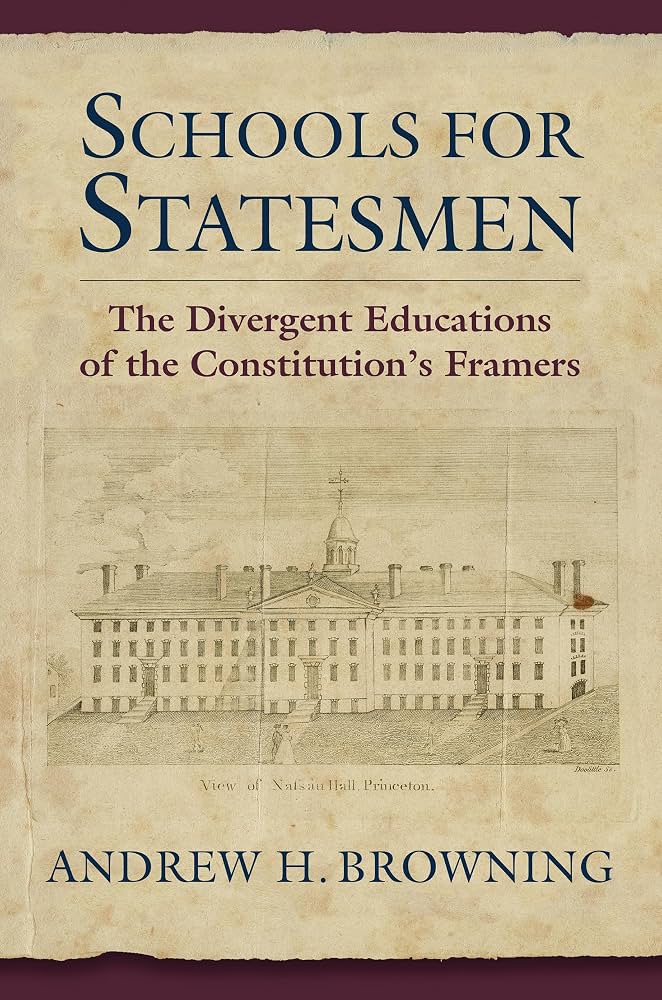 "Schools for Statesmen" explores the fifty-five individual Framers of the Constitution in close detail and argues that their different educations help explain their divergent positions at the 1787 Constitutional Convention. Those educations ranged from outlawed Irish “hedge schools” to England’s venerable Inns of Court, from the grammar schools of New England to ambitious new academies springing up on the Carolina frontier. The more traditional schools that focused on Greek and Latin classics (Oxford, Harvard, Yale, William and Mary) were deeply conservative institutions resistant to change. But the Scottish colleges and the newer American schools (Princeton, Philadelphia, King’s College) introduced students to a Scottish Enlightenment curriculum that fostered more radical, forward-thinking leaders. Half of the Framers had no college education and were often self-taught or had private tutors; most were quiet at the convention, although a few stubbornly opposed the new ideas they were hearing. Nearly all the delegates who took the lead at the convention had been educated at the newer, innovative colleges, but of the seven who rejected the new Constitution, three had gone to the older traditional schools, while three others had not gone to college at all.
"Schools for Statesmen" is an unprecedented analysis of the sharply divergent educations of the Framers of the Constitution. It reveals the ways in which the Constitutional Convention, rather than being a counterrevolution by conservative elites, was dominated by forward-thinking innovators who had benefited from the educational revolution beginning in the mid-eighteenth century.
Andrew Browning offers a new and persuasive explanation of key disagreements among the Framers and the process by which they were able to break through the impasse that threatened the convention; he provides a fresh understanding of the importance of education in what has been called the “Critical Period” of US history.
"Schools for Statesmen" takes a deep dive into the diverse educational world of the eighteenth century and sheds new light on the origins of the US Constitution. - Publisher's Description
Request this Title
The Memory of '76: The Revolution in American History
Hattem, Michael (2024)
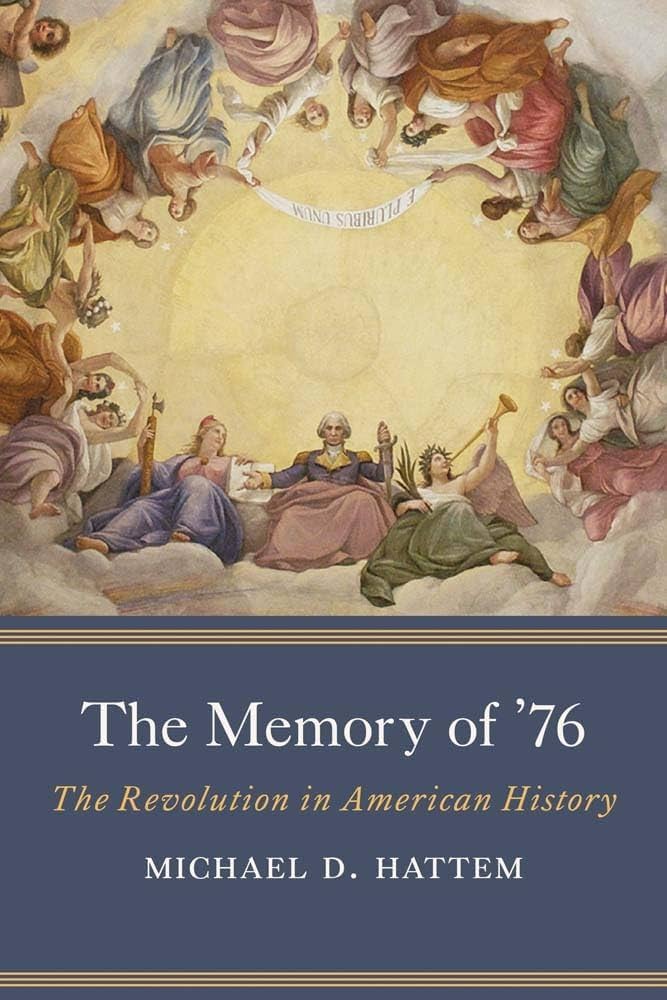 Americans agree that their nation’s origins lie in the Revolution, but they have never agreed on what the Revolution meant. For nearly two hundred and fifty years, politicians, political parties, social movements, and ordinary Americans have constantly reimagined the Revolution to fit the times and suit their own agendas.
In this sweeping take on American history, Michael D. Hattem reveals how conflicts over the meaning and legacy of the Revolution—including the Declaration of Independence and the Constitution—have influenced the most important events and tumultuous periods in the nation’s history; how African Americans, women, and other oppressed groups have shaped the popular memory of the Revolution; and how much of our contemporary memory of the Revolution is a product of Cold War–era propaganda.
By exploring the Revolution’s unique role in American history as a national origin myth, "The Memory of ’76" shows how remembering the nation’s founding has often done far more to divide Americans than to unite them, and how revising the past is an important and long-standing American political tradition. - Publisher's Description
Request this Title
The U.S. Constitution's Eighth Amendment: Bail, Fines, and Punishments
Eastaugh, Charlie (2025)
 "The U.S. Constitution’s Eighth Amendment: Bail, Fines, and Punishments" is an in-depth exploration of the Eighth Amendment’s pivotal role in American jurisprudence. This comprehensive casebook is the very first of its kind, dedicated entirely to the Eighth Amendment, with every relevant Supreme Court precedent included to 2025. The book delves into the intricacies of bail, fines, and punishments litigation, featuring key excerpts from landmark Supreme Court cases that have defined the Amendment over the past 200 years.
This work examines the historical context and evolving interpretations of the Amendment, starting with its origin in English Law and highlighting the impact of Supreme Court jurisprudence on the wider justice system. Through expert analysis of major cases, the book reveals how the Eighth Amendment shapes debates on relevant issues, providing unique insights into cases and addressing contemporary issues like racial bias in sentencing, the vanishing applicability of the death penalty, the importance of age in sentencing and punishment, and solitary confinement. Ideal for legal scholars, practitioners, and anyone interested in constitutional law, this is a vital resource for understanding one of the Constitution’s most essential protections. - Publisher's Description
Request this Title
A Right to Lie?: Presidents, Other liars, and the First Amendment
Ross, Catherine (2021)
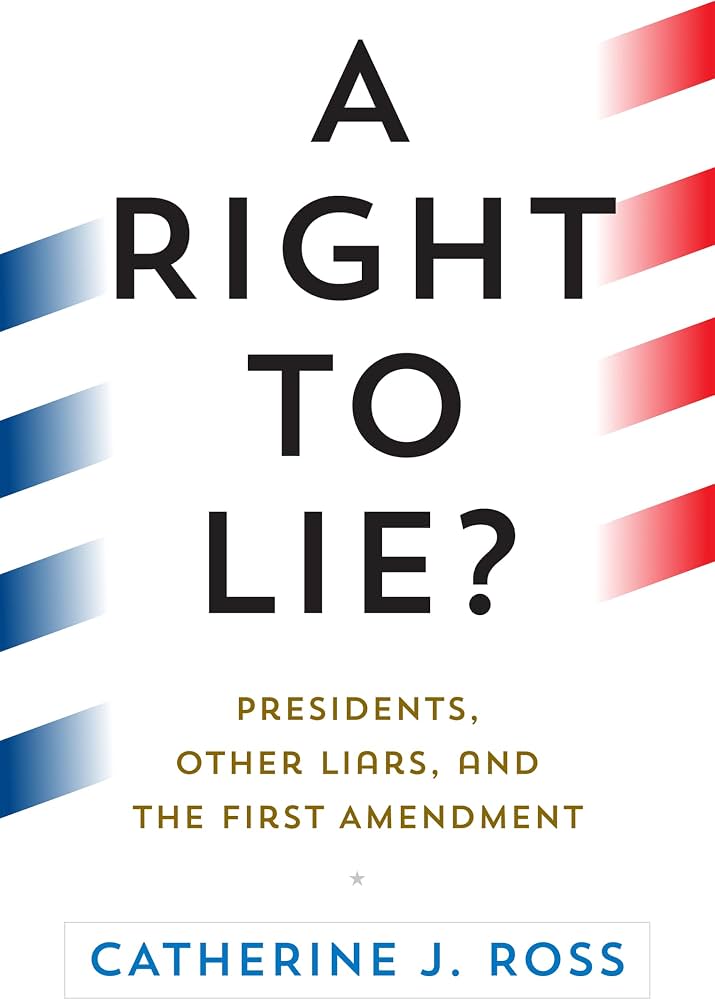 In "A Right to Lie?," legal scholar Catherine J. Ross addresses the urgent issue of whether the nation's highest officers, including the president, have a right to lie under the Speech Clause, no matter what damage their falsehoods cause. Does freedom of expression protect even factual falsehoods? If so, are lies by candidates and public officials protected? And is there a constitutional path, without violating the First Amendment, to stop a president whose persistent lies endanger our lives and our democracy?
Perhaps counter-intuitively, the general answer to each question is "yes." Drawing from dramatic court cases about defamers, proponents of birtherism, braggarts, and office holders, Ross reveals the almost insurmountable constitutional and practical obstacles to legal efforts to rein in public deception. She explains the rules that govern the treatment of lies, while also demonstrating the incalculable damage presidential mendacity may lead to, as revealed in President Trump's lies about the COVID-19 pandemic and the legitimacy of the 2020 election.
Falsehoods have been at issue in every presidential impeachment proceeding from Nixon to Trump. But, until now, no one has analyzed why public lies might be impeachable offenses, and whether the First Amendment would provide a defense. Noting that speech by public employees does not receive the same First Amendment protection as the speech of ordinary citizens, Ross proposes the constitutionally viable solution of treating presidents as public employees who work for the people. Charged with oversight of the Executive, Congress may—and should—put future presidents on notice that material lies to the public on substantial matters will be deemed a "high crime and misdemeanor" subject to censure and even impeachment. "A Right to Lie?" explains how this approach could work if the political will were in place. - Publisher's Description
Request this Title
Academic Freedom: From Professional Norm to First Amendment Right
Rabban, David (2024)
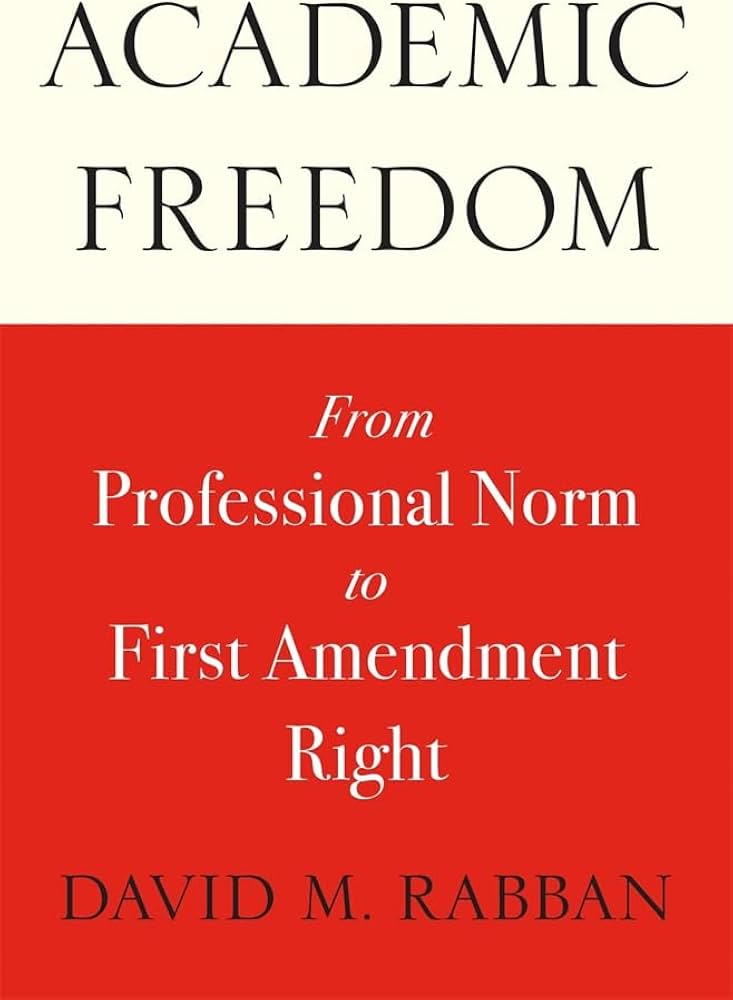 Is academic freedom a First Amendment right? Many think so, yet its relationship to free speech as guaranteed by the Constitution is anything but straightforward. David Rabban examines the extensive case law addressing academic freedom and free speech at American universities, developing a robust theory of academic freedom as a distinctive subset of First Amendment law.
In subsuming academic freedom under the First Amendment, Rabban emphasizes the societal value of the contribution to knowledge made by the expert speech of professors, the classic justification for academic freedom in the influential 1915 Declaration of the American Association of University Professors (AAUP). Any indication that professors might be disciplined because people without academic training disagree with their scholarly views would undermine confidence in the integrity of their work and therefore their ability to perform this vital function on behalf of the public. Rabban argues that academic freedom fosters two central First Amendment values recognized by courts in a wide range of contexts: the production and dissemination of knowledge and the contribution of free expression to democratic citizenship.
The First Amendment right of academic freedom applies most directly to professors, but it also plausibly extends to the educational decisions of universities and to students’ learning interests. More broadly, this vision of academic freedom can guide in developing additional distinctive First Amendment rights to protect the expert expression of journalists, librarians, museum curators, and other professionals. At a time when academic freedom is under attack from many directions, "Academic Freedom" proposes a theoretically satisfying and practically useful guide to its meaning as a First Amendment right. - Publisher's Description
Request this Title
The Fight for Free Speech: Ten Cases That Define our First Amendment Freedoms
Rosenberg, Ian (2021)
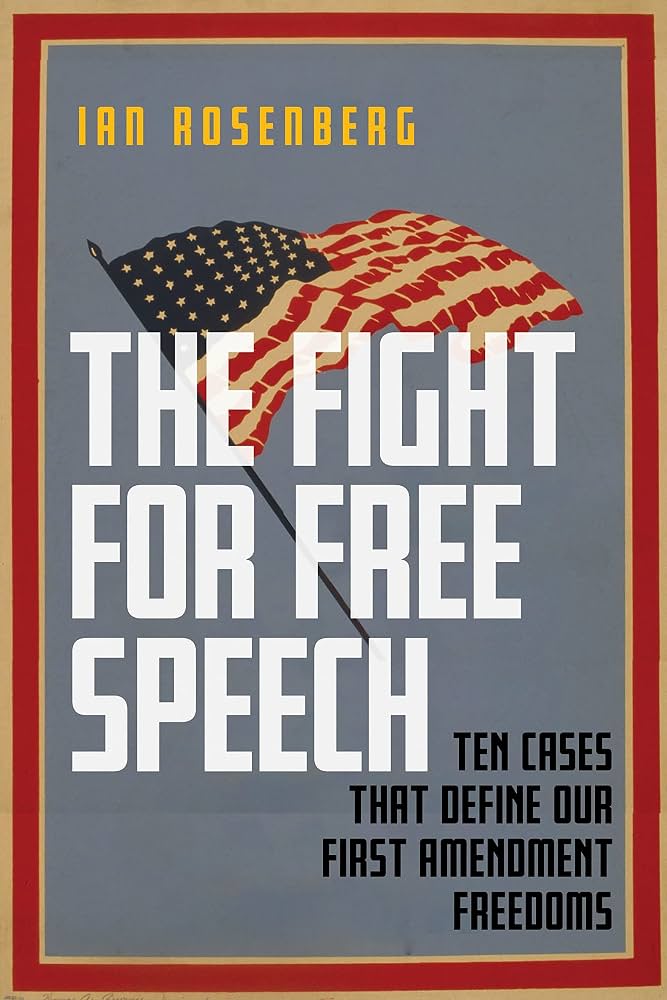 Americans today are confronted by a barrage of questions relating to their free speech freedoms. What are libel laws, and do they need to be changed to stop the press from lying? Does Colin Kaepernick have the right to take a knee? Can "Saturday Night Live" be punished for parody? While citizens are grappling with these questions, they generally have nowhere to turn to learn about the extent of their First Amendment rights.
"The Fight for Free Speech" answers this call with an accessible, engaging user’s guide to free speech. Media lawyer Ian Rosenberg distills the spectrum of free speech law down to ten critical issues. Each chapter in this book focuses on a contemporary free speech question―from student walkouts for gun safety to Samantha Bee’s expletives, from Nazis marching in Charlottesville to the muting of adult film star Stormy Daniels― and then identifies, unpacks, and explains the key Supreme Court case that provides the answers. Together these fascinating stories create a practical framework for understanding where our free speech protections originated and how they can develop in the future. As people on all sides of the political spectrum are demanding their right to speak and be heard, "The Fight for Free Speech" is a handbook for combating authoritarianism, protecting our democracy, and bringing an understanding of free speech law to all. - Publisher's Description
Request this Title
To Trust the People with Arms: The Supreme Court and the Second Amendment
Cottrol, Robert; Denning, Brannon (2024)
 In 2007, for the first time in nearly seventy years, the Supreme Court decided to hear a case involving the Second Amendment. The resulting decision in District of Columbia v. Heller (2008) was the first time the Court declared a firearms restriction to be unconstitutional on the basis of the Second Amendment. It was followed two years later by a similar decision in McDonald v. City of Chicago, and in 2022, the Court further expanded its support for Second Amendment rights in New York State Rifle and Pistol Association v. Bruen—a decision whose far-reaching implications are still being unraveled. "To Trust the People with Arms" explores the remarkable and complex legal history of how the right to bear arms was widely accepted during the nation’s founding, was near extinction in the late twentieth century, and is now experiencing a rebirth in the Supreme Court in the twenty-first century.
Robert J. Cottrol and Brannon P. Denning link the right to bear arms with other major themes in American history. Prompted by the eighteenth-century belief that arms played a vital role in preserving the liberties of the citizen, the Second Amendment met many challenges in the nation’s history. Among the most acute of these were racism, racial violence, and the extension of the right to bear arms to African Americans and other marginalized groups. The development of modern firearms and twentieth-century urbanization also challenged traditional notions concerning the value of an armed population. Cottrol and Denning make a particularly important contribution linking the nation’s participation in the wars of the twentieth century and the strengthening of the American gun culture. Most of all, they give us a nuanced and sophisticated legal history, one that engages legal realism, different varieties of originalism, and the role of chance and accident in history. "To Trust the People with Arms" integrates history, politics, and law in an interdisciplinary way to illustrate the roles that guns and the right to keep and bear arms have played in American history, culture, and law. - Publisher's Description
Request this Title
The Second: Race and Guns in a Fatally Unequal America
Anderson, Carol (2021)
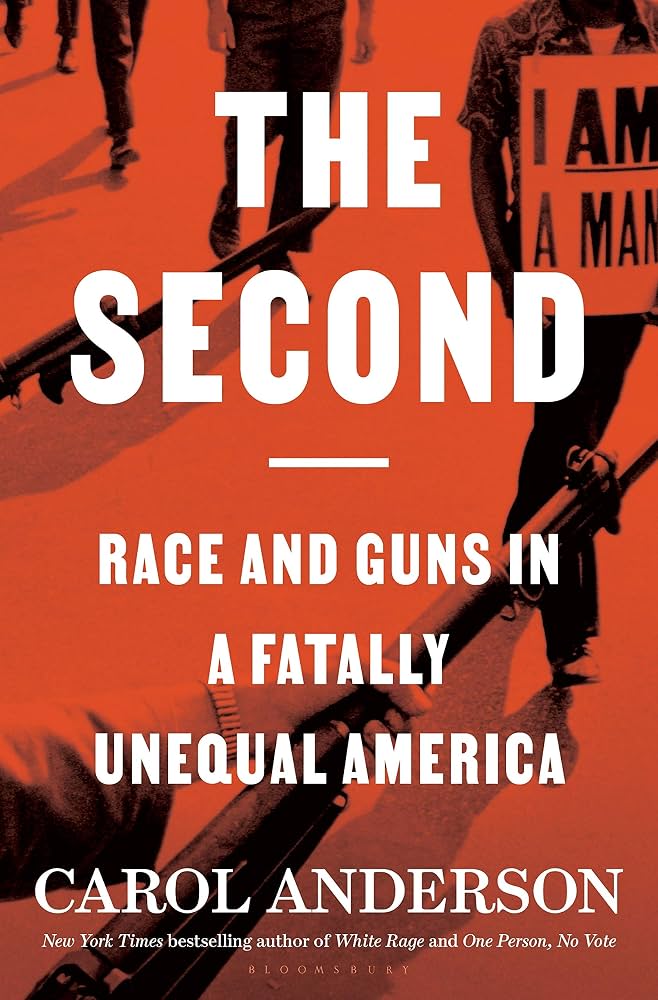 In "The Second," historian and award-winning, bestselling author of "White Rage" Carol Anderson powerfully illuminates the history and impact of the Second Amendment, how it was designed, and how it has consistently been constructed to keep African Americans powerless and vulnerable. "The Second" is neither a “pro-gun” nor an “anti-gun” book; the lens is the citizenship rights and human rights of African Americans.
From the seventeenth century, when it was encoded into law that the enslaved could not own, carry, or use a firearm whatsoever, until today, with measures to expand and curtail gun ownership aimed disproportionately at the African American population, the right to bear arms has been consistently used as a weapon to keep African Americans powerless--revealing that armed or unarmed, Blackness, it would seem, is the threat that must be neutralized and punished.
Throughout American history to the twenty-first century, regardless of the laws, court decisions, and changing political environment, the Second has consistently meant this: That the second a Black person exercises this right, the second they pick up a gun to protect themselves (or the second that they don't), their life--as surely as Philando Castile's, Tamir Rice's, Alton Sterling's--may be snatched away in that single, fatal second. Through compelling historical narrative merging into the unfolding events of today, Anderson's penetrating investigation shows that the Second Amendment is not about guns but about anti-Blackness, shedding shocking new light on another dimension of racism in America. - Publisher's Description
Request this Title
"Let us vote!": Youth Voting Rights and the 26th Amendment
Frost, Jennifer (2022)
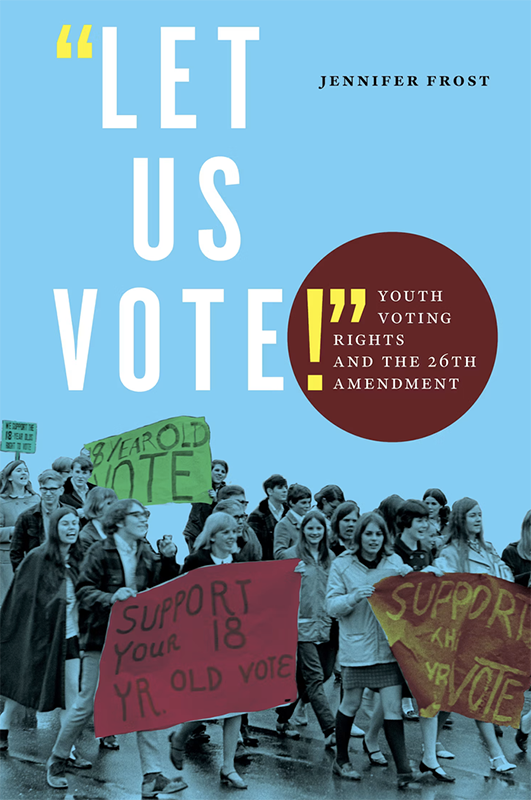 “Let Us Vote!” tells the story of the multifaceted endeavor to achieve youth voting rights in the United States. Over a thirty-year period starting during World War II, Americans, old and young, Democrat and Republican, in politics and culture, built a movement for the 26th Amendment to the US Constitution, which lowered the voting age from twenty-one to eighteen in 1971. This was the last time that the United States significantly expanded voting rights.
Jennifer Frost deftly illustrates how the political and social movements of the time brought together bipartisan groups to work tirelessly in pursuit of a lower voting age. In turn, she illuminates the process of achieving political change, with the convergence of “top-down” initiatives and “bottom-up” mobilization, coalition-building, and strategic flexibility. As she traces the progress toward achieving youth suffrage throughout the ’60s, Frost reveals how this movement built upon the social justice initiatives of the decade and was deeply indebted to the fight for African American civil and voting rights.
2021 marks the fiftieth anniversary of this important constitutional amendment and comes at a time when scrutiny of both voting age and voting rights has been renewed. As the national conversation around climate crisis, gun violence, and police brutality creates a new call for a lower voting age, “Let Us Vote!” provides an essential investigation of how this massive political change occurred, and how it could be brought about again. - Publisher's Description
Request this Title
American by Birth: Wong Kim Ark and the Battle for Citizenship
Nackenoff, Carol; Novkov, Julie (2021)
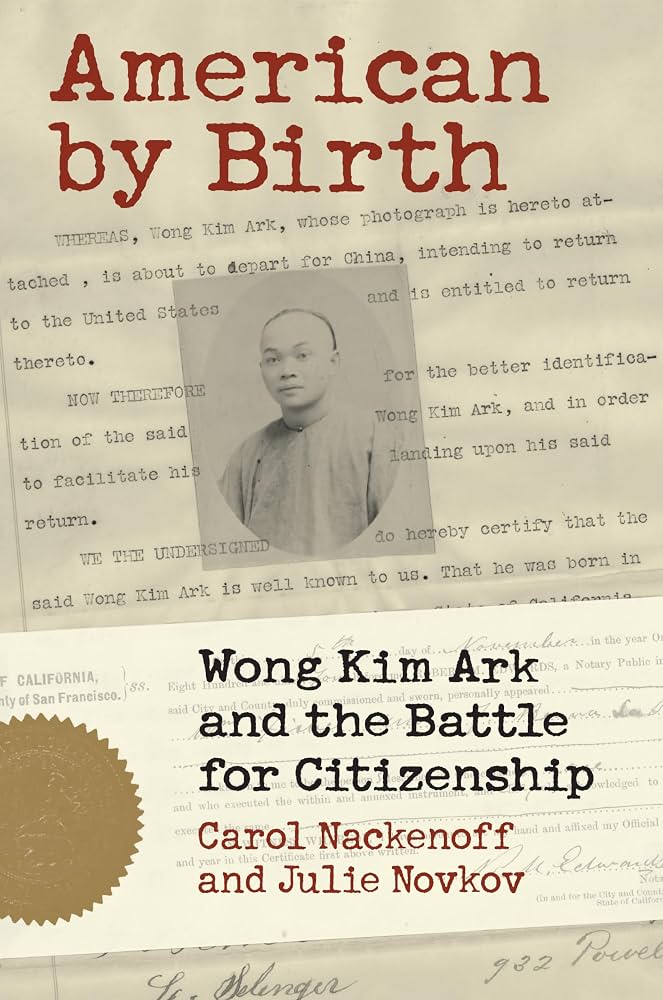 "American by Birth" explores the history and legacy of Wong Kim Ark and the 1898 Supreme Court case that bears his name, which established the automatic citizenship of individuals born within the geographic boundaries of the United States. In the late nineteenth century, much like the present, the United States was a difficult, and at times threatening, environment for people of color. Chinese immigrants, invited into the United States in the 1850s and 1860s as laborers and merchants, faced a wave of hostility that played out in organized private violence, discriminatory state laws, and increasing congressional efforts to throttle immigration and remove many long-term residents. The federal courts, backed by the Supreme Court, supervised the development of an increasingly restrictive and exclusionary immigration regime that targeted Chinese people. This was the situation faced by Wong Kim Ark, who had been born in San Francisco in the 1870s and who earned his living as a cook. Like many members of the Chinese community in the American West he maintained ties to China. He traveled there more than once, carrying required re-entry documents, but when he attempted to return to the United States after a journey from 1894 to 1895, he was refused entry and detained. Protesting that he was a citizen and therefore entitled to come home, he challenged the administrative decision in court. Remarkably, the Supreme Court granted him victory.
This victory was important for Wong Kim Ark, for the ethnic Chinese community in the United States, and for all immigrant communities then and to this day. Though the principle had links to seventeenth-century English common law and in the United States back to well before the American Civil War, the Supreme Court’s ruling was significant because it both inscribed the principle in constitutional terms and clarified that it extended even to the children of immigrants who were legally barred from becoming citizens. "American by Birth" is a richly detailed account of the case and its implications in the ongoing conflicts over race and immigration in US history; it also includes a discussion of current controversies over limiting the scope of birthright citizenship. - Publisher's Description
Request this Title
How Machines Came to Speak: Media Technologies and Freedom of Speech
Petersen, Jennifer (2022)
 In "How Machines Came to Speak" Jennifer Petersen constructs a genealogy of how legal conceptions of “speech” have transformed over the last century in response to new media technologies. Drawing on media and legal history, Petersen shows that the legal category of speech has varied considerably, evolving from a narrow category of oratory and print publication to a broad, abstract conception encompassing expressive nonverbal actions, algorithms, and data. She examines a series of pivotal US court cases in which new media technologies—such as phonographs, radio, film, and computer code—were integral to this shift.
In judicial decisions ranging from the determination that silent films were not a form of speech to the expansion of speech rights to include algorithmic outputs, courts understood speech as mediated through technology. Speech thus became disarticulated from individual speakers. By outlining how legal definitions of speech are indelibly dependent on technology, Petersen demonstrates that future innovations such as artificial intelligence will continue to restructure speech law in ways that threaten to protect corporate and institutional forms of speech over the rights and interests of citizens. - Publisher's Description
Request this Title
Freedom of Religion
Leiter, Richard; Mersky, Roy (2021)
 The First Amendment of the U.S. Constitution states, Congress shall make no law respecting an establishment of religion, or prohibiting the free exercise thereof...16 words that have led to a great deal of controversy over the years as people have struggled to define what it means to "establish" a religion or exactly how government may "prohibit the free exercise thereof."
Intended for U.S. history and political science students, this eBook contains concise, straightforward summaries, analyzing and explaining groundbreaking court cases on the issue of freedom of religion. - Publisher's Description
Request this Title
George Washington and the Two-Term Precedent
Yalof, David Alistair (2023)
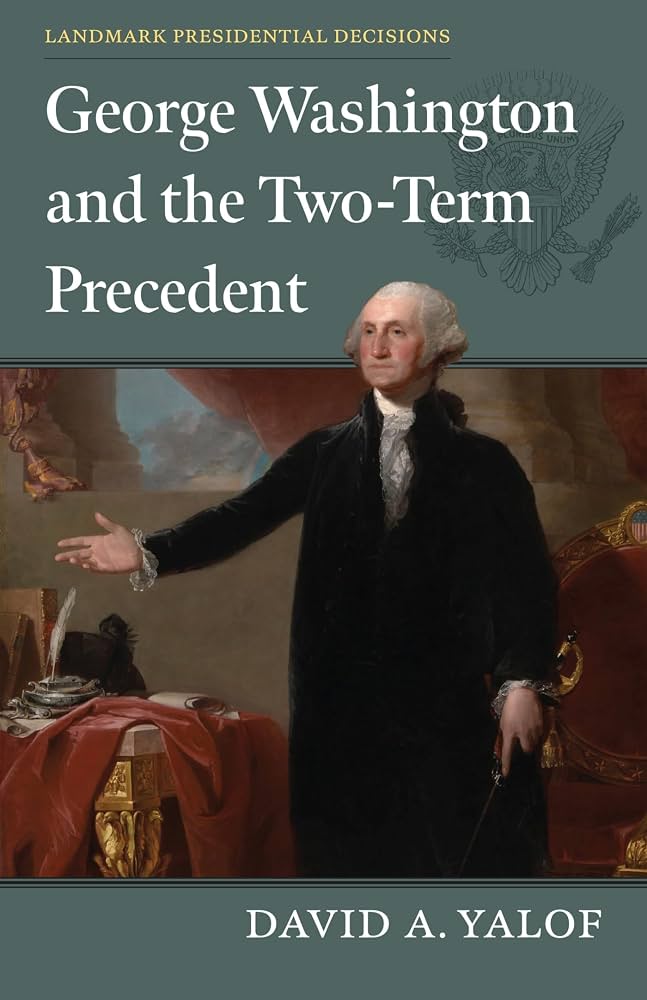 One of the earliest and most consequential presidential decisions in American history was George Washington’s choice to step down after two terms in office, despite the fact that he would almost certainly have won a third term had he chosen to run. The example he intended to set—and the circumstances he faced at the time—tell a more complicated story of the true motives behind his decision to retire and the impact his decision had on his successors and the nation. In "George Washington and the Two-Term Precedent," David A. Yalof examines how this decision set a pattern that would be followed by presidents for more than a century until FDR began serving a third term in 1941.
While often portrayed simply as a noble decision by Washington to restrain the power of the executive office, Washington’s decision was in fact motivated by self-interest and a desire to cement a legacy of honor and integrity. Yalof shows that he was never motivated by the desire to reign in the executive with an unwritten two-term limit. If anything, Washington hoped to strengthen the executive branch by demonstrating that the institution of the presidency could be trusted with the power and independence than it had so far received. His voluntary relinquishment of the presidency after two terms in office achieved these goals.
Yalof focuses on the two-term precedent and how it came into being not by legal prescription but by the tacit influence of Washington’s refusal to run for a third term and what it suggests about American conceptions of executive power. "George Washington and the Two-Term Precedent" offers a sober reminder that the country’s most famous and original hero chose to walk away from power, and it was that decision that cemented his greatness in American history. - Publisher's Description
Request this Title
Constitutional Orphan: Gender Equality and the Nineteenth Amendment
Monopoli, Paula (2020)
 In "Constitutional Orphan," Professor Paula Monopoli explores the significant role of former suffragists in the constitutional development of the Nineteenth Amendment -- the woman suffrage amendment ratified in 1920. She sheds new light on the connection between the suffragists as institutional actors in civil society and the emergence of a "thin" conception of the Nineteenth Amendment as a mere nondiscrimination in voting rule, rather than a robust equality norm.
In this compelling legal history, Monopoli illuminates how the Nineteenth had implications for federalism, women's citizenship and the definition of equality, as well as how gender, race and class intersect to affect our constitutional development. Monopoli explores the choice by both the National Woman's Party and the National American Woman Suffrage Association to turn away from African American suffragists who were denied the vote even after ratification of the Nineteenth Amendment. Using original sources, legislative history and case analysis, she develops a persuasive theory connecting that moral and strategic failure to the emergence of a narrow interpretation of the amendment. Monopoli also evaluates the impact of class divisions among former suffragist allies. These divisions around support for the NWP's Equal Rights Amendment, found social feminists opposing that "blanket" amendment for fear of its impact on the constitutional validity of protective labor legislation for working-class women.Monopoli details how many state courts, left without federal enforcement legislation to guide them, used strict construction to cabin the emergence of a more robust interpretation of the Nineteenth Amendment, as a broad equality norm.
She concludes with an examination of new legal scholarship that suggests ways in which such a robust understanding of the Nineteenth Amendment could be used today to expand gender equality. In this compelling legal history, Monopoli illuminates how gender, race and class intersect to affect our constitutional development. - Publisher's Description
Request this Title
The Bill of Rights in Modern America
Bodenhamer, David; Ely, James (2022)
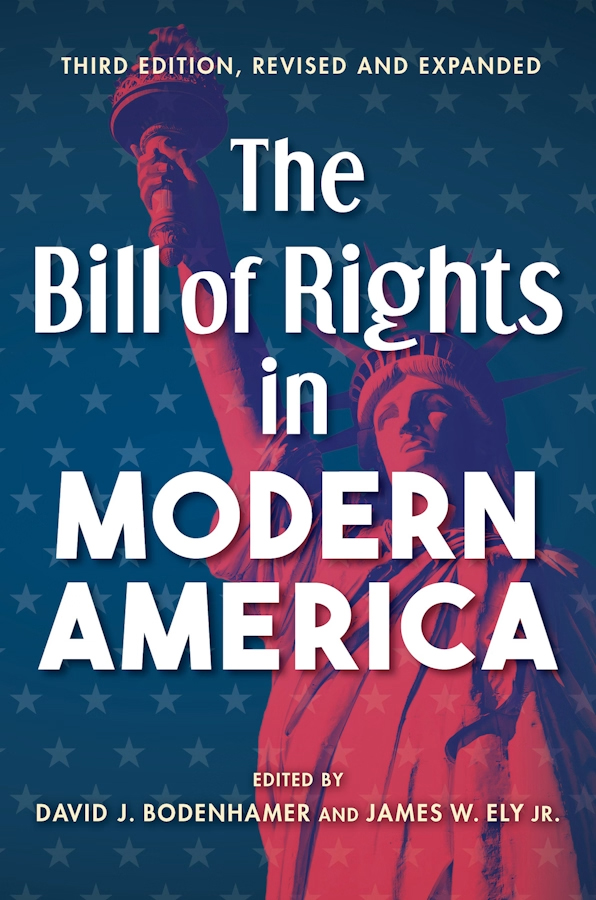 This newly revised and expanded edition of "The Bill of Rights in Modern America" captures the contentious national debate about the nature and extent of our individual rights.
Free speech, the separation of church and state, public safety and gun control, property rights, the rights of criminals and victims, the limits of law enforcement, the death penalty, affirmative action, the right to privacy, abortion, states' rights -- the Bill of Rights has been evoked as the legal basis for every one of these issues.
Twelve distinguished legal scholars discuss the history of and the current debates on these and other important rights issues in a book that is certain to stimulate thoughtful discussion among all citizens. - Publisher's Description
Request this Title
Citizenship in the American Republic
Fife, Brian (2021)
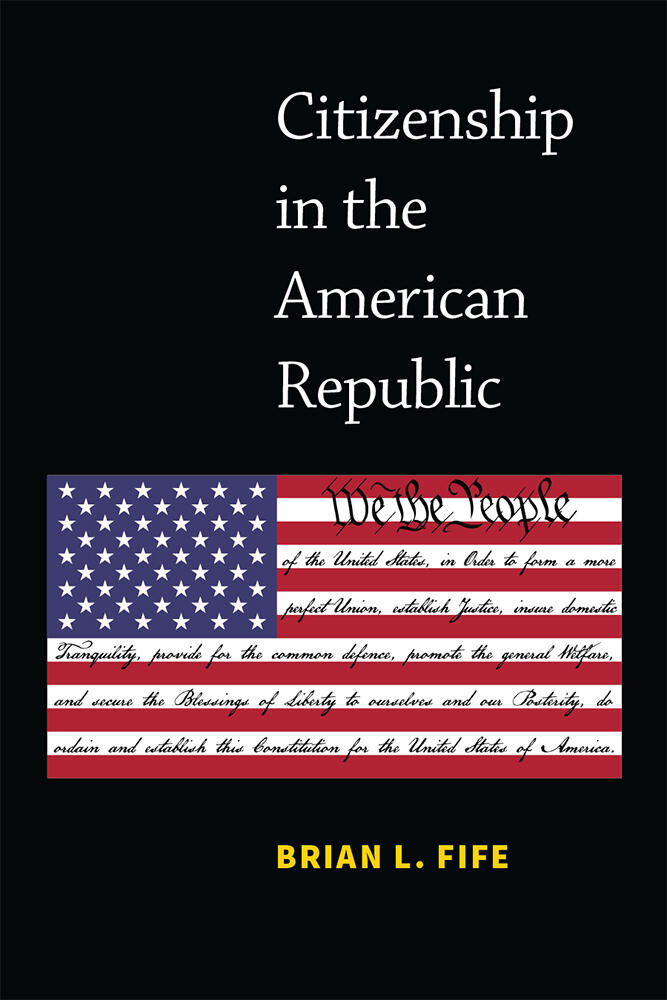 The Constitution has governed the United States since 1789, but many Americans are not aware of the structural rules that govern the oldest democracy in the world. Important public policy challenges require a knowledgeable, interested citizenry able to address the issues that represent the rich pageantry of American society. Issues such as climate change, national debt, poverty, pandemics, income inequality, and more can be addressed sufficiently if citizens play an active role in their own republic. Collectively, citizens are vulnerable to exploitation and manipulation if we place limits on our individual political knowledge. A more informed, engaged citizenry can best rise to the great policy challenges of contemporary society and beyond.
Brian L. Fife provides readers with essential information on all aspects of American politics, showing them how to use political knowledge to shape the future of the republic. Activist citizens are the key to making the United States a more vibrant democracy. Fife equips citizens and would-be citizens with the tools and understanding they need to engage fully in the political process. At the end of each chapter, he analyzes why citizenship matters and how citizens can use that chapter’s material in their own lives. Fife also provides readers with a citizen homework section that presents web links to further explore issues raised in each chapter. - Publisher's Description
Request this Title
Reinterpreting the Constitution: How the Supreme Court Changes the Law
Mannino, Edward (2023)
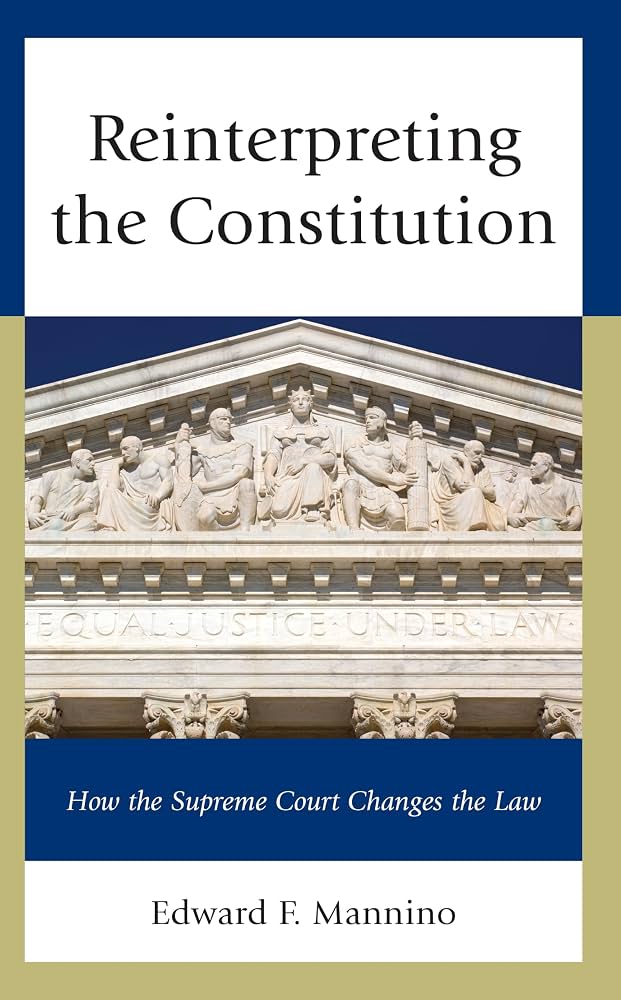 In the Senate Confirmation Hearings on his nomination, Chief Justice John Roberts memorably stated that he believed that the proper role of judges is "to call balls and strikes," an analogy repeated by Justice Kavanaugh in his hearings.
This book makes clear, however, that the justices have often changed the strike zone. They have overruled past precedent, significantly expanded or limited prior rulings, created new constitutional rights such as that protecting same-sex marriage, while striking down constitutional rights recognized for many years, including a woman's right to choose an abortion. The book carefully reviews some 200 cases, highlighting what the justices themselves have said in explaining their rulings. It also notes how the dissenting opinions are particularly valuable in explaining the dissenters' often accurate contentions that some decisions significantly changed prior precedent. The book begins with cases decided in the 19th and 20th centuries to give the background of the constitutional issues discussed, but the overall focus is on 21st-century decisions since they have accelerated changes in constitutional law. - Publisher's Description
Request this Title