by Sarah Bender
This fall, Carnegie Mellon University Libraries hosted a dynamic series of open science events that brought researchers, librarians, and thought leaders together to share resources, exchange ideas, and tackle real-world challenges. Through engaging programming — from an interactive unconference to a global symposium — CMU Libraries reaffirmed its role as a national model for how academic libraries can lead in advancing transparent, collaborative research.
Since launching one of the nation’s first open science programs based in an academic library, CMU Libraries has helped define what open science looks like in higher education. Open at CMU continues to bring researchers and librarians together to explore rapidly evolving practices in open research and open data, helping shape a more equitable and accessible research ecosystem.
“The open science movement is gaining momentum around the world, and CMU Libraries is at the center of the conversation about how libraries can facilitate progress,” said STEM Librarian and Director of the Open Science Program Melanie Gainey. “By hosting events that foster collaboration and inspire shared practices, we’re showing what’s possible — and helping others do the same.”
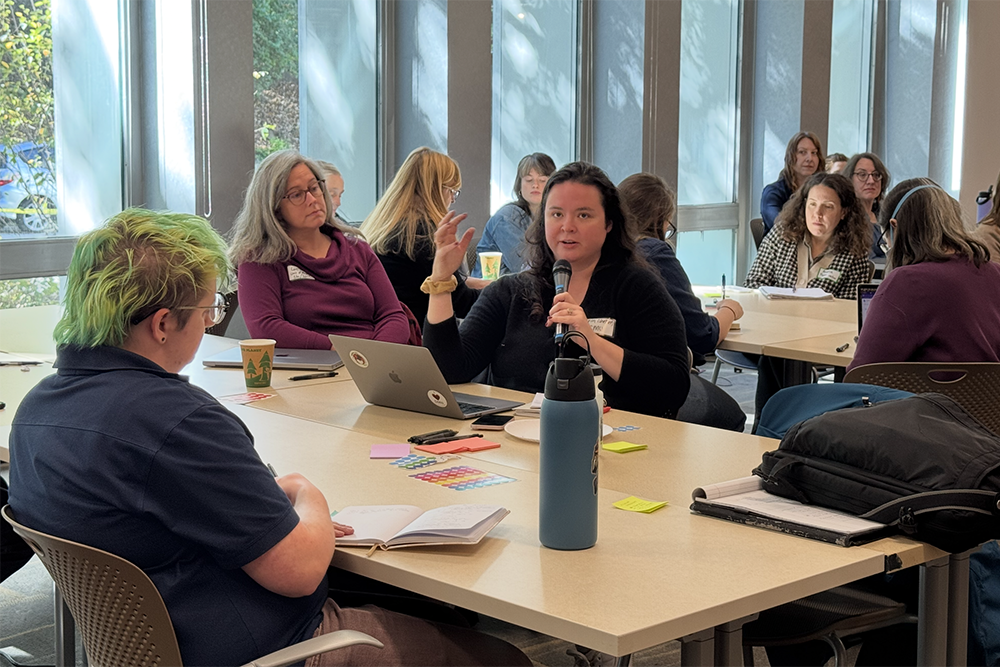
The semester kicked off with the inaugural Cracking Open Unconference, an in-person event held in Pittsburgh that invited participants to shape the agenda around their most pressing questions and ideas. With more than 50 attendees representing over 25 institutions, the event focused on identifying shared challenges and creative pathways forward for supporting open science in diverse academic settings.
“The 2025 Cracking Open Unconference provided a great path to relationship building and learning with peers interested in open science,” said Lori Tschirhart, University of Michigan Earth & Environmental Sciences Librarian and HS-STEM Assistant Director. “Takeaways from every session will inform my thinking as I consider how to prioritize and communicate open science activities at my local institution.”
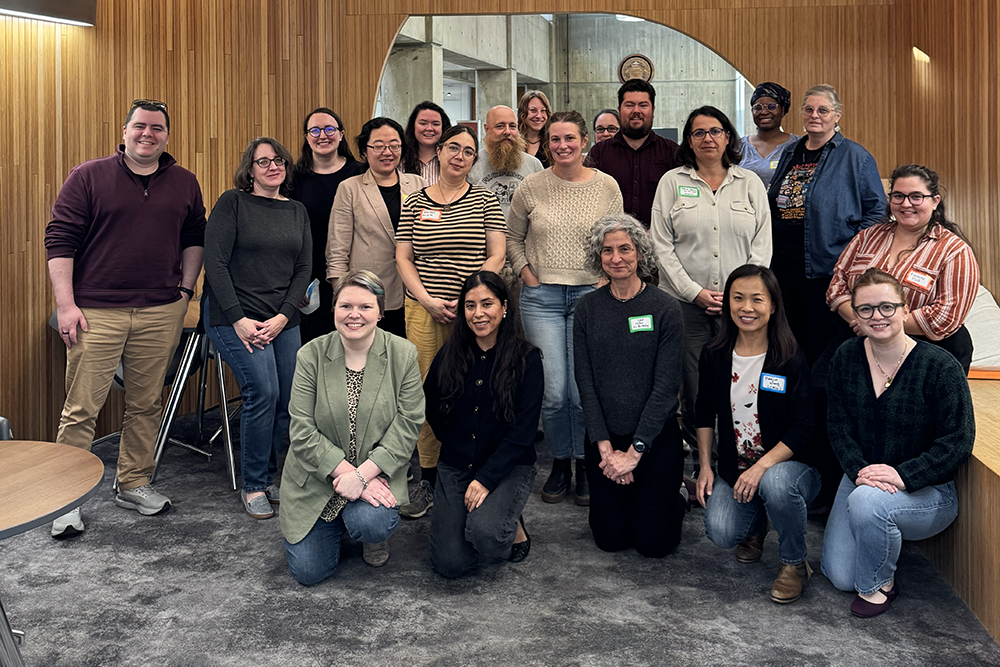
Then, on Oct. 17, CMU Libraries hosted the first in-person meeting of the Open Science Collaborative of Library and Information Professionals (OSCLIP). Organized by STEM Librarian Huajin Wang, the event gathered library professionals in the Sorrells Library Den for interactive sessions centered on shared priorities, future collaborations, and community support.
“OSCLIP is about creating space for open science practitioners in academic libraries to connect, learn, and lead together,” said Wang. “By bringing practitioners into conversation, we’re building a network that can collaboratively address the complexities of open science and elevate our collective impact.”
Participants engaged in small group discussions to surface common themes, brainstorm solutions to shared challenges, and explore ideas for future projects. OSCLIP will continue to grow as a peer-driven community, and interested library professionals are invited to join the Google Group and Slack to stay informed about upcoming activities and connect with each other.
The semester concluded with the Libraries’ signature open science event, the Open Science Symposium, held virtually on Nov. 13. Now in its fifth year, the event drew nearly 300 attendees from four continents and featured a full day of virtual talks and panels from researchers and thought leaders in academia, industry, and publishing.
“The Open Science Symposium demonstrates what’s possible when we build connections across disciplines and institutions,” said Gainey. “This event grows every year and continues to be a platform for new ideas, partnerships, and approaches to open research.”
CMU researchers were prominently featured throughout the day. Biological Sciences Eberly Family Associate Professor Eric Yttri contributed to a session focused on AI and open science. His talk explored the process of building usable, accessible machine learning tools to benefit the scientific community.
Alumna Meredith Schmehl, a 2018 Mellon College of Science graduate with degrees in neuroscience and psychology, spoke about evaluation. She discussed encouraging preprint publication by incorporating it into funder open access policies. She was joined in the session by Materials Science and Engineering Assistant Research Professor Rachel Kurchin, who serves as an associate editor-in-chief for the Journal of Open Source Software.
In an early career researcher lightning talk, chemistry Ph.D. candidate Leticia Pequeno Madureira presented her work using the Julia programming language for quantum chemistry applications.
“Good practices in coding and data analysis are key aspects to advance scientific discovery. By following some of these guidelines, I could make my code to calculate energy and property of molecules much faster,” she explained. “This allows for the scaling up of such calculations, allowing us to work with much bigger datasets and feed AI systems. This philosophy will pave the way towards a new wave of advancement in chemical sciences.”
As open research continues to evolve, CMU Libraries remains committed to leading by example, offering programs, partnerships, and platforms that empower researchers and make knowledge accessible to all. To explore how open science can enhance your work, connect with the Open at CMU team, or subscribe to the Open at CMU newsletter.