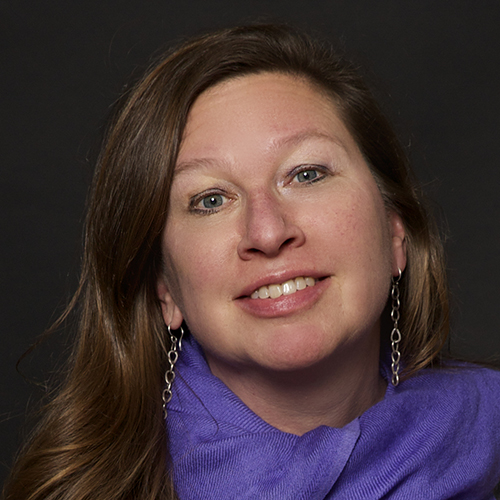
 Ambassador Sarah E. Mendelson has served at Carnegie Mellon University since 2018.
Beginning in September 2024, she is Director, Sustainable Futures.
From January 2018-August 2024, she was Head of CMU's Heinz College in Washington, DC and Distinguished Service Professor of Public Policy.
Contact: smendelson@cmu.edu
At CMU, she co-chairs the University’s Sustainability Initiative and is a faculty affiliate of the Scott Institute for Energy Innovation. She is also a nonresident Senior Fellow with the Center for Sustainable Development in the Global Economy and Development program at the Brookings Institution, a co-chair of SDSN USA, and a board member of the Free Russia Foundation. In fall 2026, she was listed among “The New Abolitionists” in recognition of the work she has done over several decades combating human trafficking.
Her current work focuses on local and global challenges including socioeconomic needs and demographic disparities using the Sustainable Development Goals (SDGs) as a framework. She collaborates with colleagues to leverage AI to close data gaps and data lags. CMU’s Sustainable Futures plans to collaborate with global partners and local communities to design people-centered data systems that reveal pressing local needs, and where possible, identify local solutions as well as recommend policies that drive tangible social impact. The work is meant to elevate new models of global development to help democracies deliver and inspire new approaches to solving critical socioeconomic needs.
Drawing on previous research and strategic convenings, the work on Sustainable Future includes the establishment of a Community of Practice (CoP) populated by senior rights experts and data scientists from inside and outside CMU who are driving a paradigm shift in how we teach, train, research, and work on human rights using the SDGs.
From 2015-2017, Ambassador Mendelson served as the US Representative to the UN’s ECOSOC and as an alternate delegate from the United States to the UN’s General Assembly. She led on international development, human rights, humanitarian affairs, and combating human trafficking. There she oversaw campaigns to get country-specific resolutions passed in the General Assembly and to get NGOs, including the Committee to Protect Journalists, accredited to the UN.
Prior to her appointment as Ambassador, she served as a Deputy Assistant Administrator at USAID from 2010-2014 where she was the Agency lead on democracy, human rights, and governance. A long time policy entrepreneur, she has spent over 30 years working on development and human rights as a scholar and practitioner including in Moscow with the National Democratic Institute, on the faculty of the Fletcher School at Tufts University, and over a decade as senior adviser and inaugural director of the Human Rights Initiative at the Center for Strategic and International Studies. There she also worked as a senior fellow in the Russia and Eurasia Program where she over saw focus groups, public opinion surveys, and social marketing campaigns in Russia on a range of issues.
The author of over 100 scholarly and public policy publications, Ambassador Mendelson received her BA in history from Yale University and her PhD in political science from Columbia University. She is a member of the Council on Foreign Relations.
Research Areas
Mendelson is the editor of the recently released Higher Education and SDG 16. This book is about rethinking how we advance human rights using the framework of the Sustainable Development Goals. And specifically, the ways in which issues such as poverty, or food insecurity or maternal mortality are never about one thing only. They are interconnected. The SDGs represent a 21st century way of understanding the range of rights encompassed in the Universal Declaration of Human Rights. Rights cannot be separated from development, and development cannot be siloed from peace. This development framework elevates the importance of socioeconomic rights. The SDG principle to “leave no one behind” thus emerges as an important aspect of human rights. The SDGs were presciently built to address the challenges that have emerged as urgent in many communities—from inequality to the climate crisis, from pandemics to declines in life expectancy, from an increase in violence and conflict to the enabling of corruption. It is a framework that recognizes development happens everywhere—not just in the “global south” or in so-called “developing” countries. This book details multiple pathways out of the current doom and gloom and helps advance the closely aligned and timely endeavors of creating peaceful, just, and inclusive communities. The book touches on numerous SDGs including SDG 16 (access to justice and combating corruption); SDG 2 (addressing food insecurity); SDG 3 (health and wellbeing); SDG 4 (educating the next generation about the SDGs); SDG 5 (gender); SDG 10 (reducing inequalities); SDG 11 (sustainable cities); and SDG 17 (university partnership to advance the SDGs).
Recent Publications
- Re-Imaging Development: Integrated Approaches to Human Rights, the SDGs, and AI, "Submission to the UN Office of the High Commissioner for Human Rights Call for Input on "best practices, challenges, and lessons learned concerning integrated approaches to the promotion of protection of human rights and the implementation of the 2030 Agenda at the global level, October 2025 https://www.ohchr.org/sites/default/files/documents/cfi-subm/2030-agenda/subm-best-practices-challenges-aca-50-carnegie-mellon-university.pdf
- Edited Volume, Higher Education and SDG 16: Peace, Justice, and Strong Institutions, February 2025 https://bookstore.emerald.com/media/openaccess/9781804558928.pdf
- Rethinking How to Fight Inequalities, Poverty and Hunger: Paradigm Shifts to Accelerate Action on the SDGs, "G20/T20 Policy Brief (with Thomas Probert and Sayeed Choudhury), Sept 2024 https://www.global-solutions-initiative.org/wp-content/uploads/2025/03/TF01_ST07__Rethinking_How_to_F66e8793b09213.pdf
- How to renew American leadership on SDGs, April 2023 https://www.brookings.edu/research/how-to-renew-american-leadership-on-the-sdgs/
- Paradigm shift: Creating more just societies with SDGs, human rights, and innovations in higher education, April 2023 https://www.brookings.edu/research/paradigm-shift-creating-more-just-societies-with-the-sdgs-human-rights-and-innovations-in-higher-education/
- The US is leaving millions behind: American exceptionalism needs to change by 2030, April 2023 https://www.brookings.edu/blog/future-development/2023/04/10/the-us-is-leaving-millions-behind-american-exceptionalism-needs-to-change-by-2030/
- Congressional Testimony Sustainable Development Goals and Recovery from the COVID-19 Pandemic: Implications for U.S. Policy, September 2022 faculty-research/profiles/profiles/sarah-mendelson/_files/sarahmendelsontestimonysepttwentytwentytwo.pdf
- Heinz in the Hague, May 2022 https://www.heinz.cmu.edu/media/2022/July/heinz-in-the-hague
- Amb Sarah Mendelson On Russia's Invasion of Ukraine, March 2022, https://www.heinz.cmu.edu/media/2022/March/russia-invasion-ukraine
- The U.S. Withdrawal From Afghanistan And Digital Dinkirk - A 21st Century Public-Private Extraction, December 2021, https://www.heinz.cmu.edu/media/2021/December/the-us-withdrawal-from-afghanistan-and-digital-dunkirk-mendelson-reisher
- Room 16 Priorities Emerging from 2021 17 Rooms Exercise, (co-authored with Elizabeth Andersen with input from Room 16 participants), November 2021, https://www.brookings.edu/wp-content/uploads/2021/11/2021-Room-documents_Room16.pdf
- Reversing the Tide: Towards a New US Strategy to Support Democracy and Counter Authoritarianism, April 2021, https://freedomhouse.org/sites/default/files/2021-04/Democracy_Task_Force_Report_2021_Final4_04132021.pdf
- New Thinking on Democracy at Home and Abroad, April 2021, https://www.americanambassadorslive.org/post/new-thinking-on-democracy-at-home-and-abroad
- If You Build It They Will Come, February 2021, https://www.americanpurpose.com/articles/if-you-build-it-they-will-come/
- Combating Human Trafficking and the Biden Administration, January 2021, https://www.cfr.org/blog/combating-human-trafficking-and-biden-administration
- Room 16 Priorities Emerging from 2020 17 Rooms Exercise, (co-authored with Nancy Lindborg with input from Room 16 participants), November 2020, https://www.brookings.edu/wp-content/uploads/2020/11/16.pdf
- Carnegie Mellon University 2020 Voluntary University Review, September 2020, https://www.cmu.edu/sustainability-initiative/review/cmu-vur-2020.pdf
- Inequalities, the SDGs, and the human rights movement in the US and around the world, June 12, 2020, https://www.brookings.edu/blog/future-development/2020/06/12/inequality-the-sdgs-and-the-human-rights-movement-in-the-us-and-around-the-world
- The Virus and the Global Goals: What Could COVID-19 Mean for Sustainable Development, April 7, 2020, https://www.globaldashboard.org/2020/04/07/the-virus-and-the-global-goals-what-could-covid-19-mean-for-sustainable-development/
- The 'SDG Effect': The Emerging Pittsburgh Platform to Deliver the Global Goals Locally, January 30, 2020, https://www.brookings.edu/blog/up-front/2020/01/30/the-sdg-effect-the-emerging-pittsburgh-platform-to-deliver-the-global-goals-locally/
- Foundations Should Invest in Building the Field of Sustainable Development, Winter 2020, Stanford Social Innovation Review, faculty-research/profiles/profiles/sarah-mendelson/ssir_winter2020-viewpoint-mendelson-sdgs.pdf
- How to Get Beyond the Doom and Gloom: Align OGP with the Sustainable Development Goals, Open Government Partnership (OGP), June 20, 2019, https://www.opengovpartnership.org/stories/how-to-get-beyond-the-doom-and-gloom-align-ogp-with-the-sustainable-development-goals/
- US Cities Leading on the Sustainable Development Goals, Brookings, December 19, 2018, https://www.brookings.edu/blog/up-front/2018/12/19/us-cities-leading-on-the-sustainable-development-goals/
- Young People, the Sustainable Development Goals, and the Liberal World Order: What is to be Done? NYU’s Center on International Cooperation (NYU/CIC), October 9, 2018, Medium.com, https://medium.com/sdg16plus/young-people-the-sustainable-development-goals-and-the-liberal-world-order-what-is-to-be-done-fc648e3b2d21
- Weaponizing Social Media: Heinz Experts on Troll Farms and Fake News, Heinz College News, October 2018 https://www.heinz.cmu.edu/media/2018/October/troll-farms-and-fake-news-social-media-weaponization
- The Putin Problem: Ambassador Mendelson Talks Policy, Propaganda, and Russian Politics, Heinz College News, October 2018 https://www.heinz.cmu.edu/media/2018/October/the-putin-problem
- We Need An Updated Approach to Combat Human Trafficking, The Hill, June 2018 http://thehill.com/opinion/civil-rights/394774-we-need-an-updated-approach-to-human-trafficking
- A Research and Writing Grant As An Inflection Point In A Career, MacArthur Foundation, June 2018 https://www.macfound.org/press/40-years-40-stories/research-and-writing-grant-inflection-point-career/
On Russia and Ukraine:
- Human Rights in Russia: The Human Rights in Russia Project tracks, through survey data, the state of political and social development in Russia survey https://www.foreignaffairs.com/articles/russia-fsu/2015-10-06/putin-outs-ngos
- Sarah Mendelson, “How to Fight Putin’s NGO Crackdown,” ForeignAffairs.com, October 6, 2015, available at: https://www.foreignaffairs.com/articles/russia-fsu/2015-10-06/putin-outs-ngos
- Sarah Mendelson, “Dark Days for Civil Society, ForeignAffairs.com, March 11, 2015, available at: https://www.foreignaffairs.com/articles/2015-03-11/dark-days-civil-society
- Sarah Mendelson “Responding to Putin’s Plan Post-Crimea,” CSIS Commentary, July 24, 2014, with John R. Harvey, https://www.csis.org/analysis/responding-putin%E2%80%99s-plan-post-crimea
- Sarah Mendelson, “Don’t Forget about the Rest of Ukraine,” CNN Commentary (Global Public Square), June 9, 2014, available at: https://www.csis.org/analysis/dont-forget-about-rest-ukraine
- Sarah Mendelson “Casualty Sensitivity in a Post-Soviet Context: Russian Views of the Second Chechen War, 2001-2004,” with Theodore P. Gerber, Political Science Quarterly, Vol. 123, No. 1 (Spring 2008), 39-68
- Sarah Mendelson, “Anatomy of Ambivalence: The International Community and Human Rights Abuse in the North Caucasus,” Problems of Post-Communism, Vol. 53, No. 6 (November/December 2006), 3-15, available at: Anatomy of ambivalence: The international community and human rights abuse in the North Caucasus - Russian Federation | ReliefWeb; https://www.tandfonline.com/doi/abs/10.2753/PPC1075-8216530601
- Sarah Mendelson, “Failing the Stalin Test: Russians and Their Dictator,” with Theodore P. Gerber, Foreign Affairs, Vol. 85, No. 1 (January/February 2006), 2-8, available at https://www.foreignaffairs.com/articles/russia-fsu/2006-01-01/failing-stalin-test
- Sarah Mendelson, “Soviet Nostalgia: An Impediment to Russian Democratization,” with Theodore P. Gerber, The Washington Quarterly, Vol. 29, No. 1, (Winter 2005-2006), 83-96, abailable at: Soviet Nostalgia: An Impediment to Russian Democratization
- Sarah Mendelson, “Russians’ Rights Imperiled: Has Anybody Noticed?” International Security, Vol. 26, No. 4 (Spring 2002), 39-69, available at: https://www.csis.org/analysis/russians-rights-imperiled-has-anybody-noticed
- Sarah Mendelson, “The Putin Path: Civil Liberties and Human Rights in Retreat,” Problems of Post-Communism, Vol. 47, No. 5 (September/October 2000), 3-12
Additional Information
Education
- Columbia University, Ph.D., Department of Political Science
- Columbia University, Harriman Institute Certificate
- Yale University, B.A., History
Community Service
- Senior Advisor of SDSN US
https://www.sdsnusa.org/leadership-council
- Board Member, Free Russia Foundation
https://www.4freerussia.org/press-center/sarah-mendelson-and-tom-firestone-join-free-russia-foundation-board-of-directors/
- Brookings Institutions Experts
https://www.brookings.edu/experts/sarah-e-mendelson/
- Council on Foreign Relations Study Group on Combating Human Trafficking
https://www.cfr.org/report/ending-human-trafficking-twenty-first-century
- Freedom House, CSIS and McCain Institute Task Force on US Strategy to Support Democracy and Counter Authoritarianism
https://freedomhouse.org/task-force-us-strategy-support-democracy-and-counter-authoritarianism
- US Global Leadership Coalition; Pennsylvania Advisory Committee
https://www.usglc.org/downloads/advisory-committees/PA-Advisory-Committee.pdf
- CMU Sustainability Initiative, Steering Committee Co-Chair
https://www.cmu.edu/sustainability-initiative/about/index.html
- The US Holocaust Memorial Museum Advisory Group on Genocide, Washington DC
https://www.ushmm.org/m/pdfs/Todd_Buchwald_Report_031819.pdf
- UNA’s Distinguished Advisory Committee
http://www.unanca.org/
Speaking Engagements and Convenings
- The Future of Liberalism and International Order
Columbia University, 4th Annual Robert Jervis Conference
March 27, 2026
- Foreign Affairs Oral History Program: Democracy and Elections
The Association for Diplomatic Studies and Training
November 25, 2025
- Why the U.S. Needs to Fix Its Own Democracy Before Promoting it Abroad
Harriman Institute at Columbia University
March 10, 2026
- The UN Without the United States: The Future of Sustainable Development
Carnegie Endowment for International Peace
February 23, 2026
- Challenges and Opportunities to Sustainable Development in the United States and Beyond: Global Health
Heinz College, Carnegie Mellon University
February 26, 2026
- America’s Rural Future: The Brookings–AEI Commission on U.S. Rural Prosperity
Heinz College, Carnegie Mellon University
January 22, 2026
- Conversations that Matter to Advance Sustainable Development through Higher Education Institutions
University of Toronto
April 29, 2025
- Challenges and Opportunities to Sustainable Development in the United States and Beyond
Heinz College, Carnegie Mellon University
Spring 2025
- Deeper Conversations: America's Role in the World
Carnegie Mellon University
April 17, 2025
- South Carolina Law Review 2025 Symposium: Making Justice Real: Exploring the Intersection of Access to Justice, the Rule of Law, and Democracy
University of South Carolina
February 27, 2025
- International Affairs for Speakers Series
School of Public and International Affairs, University of Georgia
November 21, 2024
- Generating Social Justice Solutions and Community Data
Workshop held in collaboration with the Brookings Institution
June 21, 2024
- Surfacing Social Justice Solutions in Voluntary Local Reviews
Workshop held in collaboration with the Brookings Institution
May 2, 2024
- Outcome Document from "Toward a Paradigm Shift: Creating a Community of Practice on Human Rights and the Sustainable Development Goals"
A Strategic Convening Held at the Bellagio Center
May 23-27, 2023
- S5 E4: Putin's War of Aggression, One Year In; How We Got Here and What Needs to Happen Next with Russia and Ukraine
Organized by Carnegie Mellon University
February 14, 2023
- In Pursuit of Peace
Organized by University Global Coalition
October 4, 2022
- 17 Books: Higher Education and the SDGs
Organized by Sustainable Development Solutions Network (SDSN) Youth and Emerald Publishing
September 16, 2022
- Congressional Testimony Sustainable Development Goals and Recovery from the COVID-19 Pandemic: Implications for U.S. Policy
Organized by House Foreign Affairs Committee
September 15, 2022
- Strengthening Accountability and Democratic Institutions in the Fight Against Human Trafficking
Organized by Council on Foreign Relations
August 4, 2022
- Russia's War in Ukraine: Impacts on International (Dis)order
Organized by Heinz College at Carnegie Mellon University
May 12, 2022
- Education and Capacity Building
Organized by National Academies Science Engineering Medicine
April 18, 2022
- An Inside Look at Russia
Organized by Council on Foreign Relations
April 5, 2022
- 17 Books: Higher Education and the SDGs (SDG Week 2022)
Organized by University Global Coalition
March 2, 2022
- INTERSECT@CMU Conference: Peaceful, Just and Inclusive Societies
Organized by Carnegie Mellon University
February 11, 2022
- Advancing Best Practices For Just COVID-19 Relief And Recovery Efforts
Organized by Brookings Institute
January 11, 2022
- Speaker Series: How Ideas Become Policy - Getting Stuff Done
Organized by Carnegie Mellon University
September 8-29, 2021
- Tensions in Ukraine
Organized by Council on Foreign Relations
June 30, 2021
- FAST Podcast on Development Finance
Organized by FAST (Finance Against Slavery and Trafficking) Podcast
June 15, 2021
- Conversation on Human Rights and Civil Rights
Organized by Carnegie Mellon University Alumni Association
May 18, 2021
- Biden's Democracy Summit and Building Tech Alliances Against Disinformation
Organized by American Purpose
February 12, 2021
- Democracy Now and Next: Conversations with Experts on U.S. Approaches to Advancing Democracy and Countering Authoritarianism At Home and Around the World
Organized by Carnegie Mellon University
February-March 2021
- Notre Dame, San Jose High School TASC Justice and Women of Impact Speaker Series: Ambassador Sarah Mendelson
Organized by Notre Dame, San Jose High School
December 4, 2020
- Accelerating Education for the SDGs in Universities
Organized by UN Sustainable Development Solutions Network
November 18, 2020
- The Sustainable Development Goals from Global to Local: The Role of Universities in the Decade of Action
Organized by the University of Maryland, Global Communities
October 26, 2020
- Bridging the Gap between Theory and Policy
Organized by Bridging the Gap Project
October 20, 2020
- Global Forum of the Public Interest Law Network
Organized by PILnet
October 20, 2020
- The Future We Want
Organized by the United Nations Association of the National Capital Area
October 15, 2020
- Annual Conference of the Society for International Development, Plenary: Accelerating Impact in the Decade to Deliver
Organized by Society for International Development
October 8, 2020
- Universities Driving Collaborative Solutions for the Decade of Action
Organized by the International Conference of Sustainable Development
September 22, 2020
- University Global Coalition 2020 Annual Gathering
Organized by Georgia Institute of Technology
September 21, 2020
Atlanta, GA
- COVID-19: Threats and Opportunities to Sustainable Development Goals
Organized by World Affairs Council in Pittsburgh
June 10, 2020
Pittsburgh, PA
- University Reporting on the SDGs
Organized by SDSN Canada
May 22, 2020
- Lessons in Leadership in Times of Crisis
Organized by Carnegie Mellon University, Heinz College
April-May 2020
Pittsburgh, PA
- America in 2020: Mobilizing for a Decade of Sustainable Development
Organized by Sustainable Development Solutions Network (SDSN) United States of America
January 23, 2020
Arlington, VA
- Tackling the Sustainable Development Goals One Bite at a Time
Organized by Carnegie Mellon University, Heinz College, Heinz Radio
January 9, 2020
Pittsburgh, PA
- Addressing Foreign Interference: Best Practices and Gaps to be Closed
Organized by the Atlantic Council
December 9, 2019
Washington, DC
- Human Rights at Crossroads? Experts Discuss What's Next for the International Human Rights System
Organized by the World Justice Project/American Society of International Law
October 31, 2019
Washington, DC
- UN and Human Rights in 2019
Organized by the United Nations Association in the National Capital Area
October 28, 2019
Washington, DC
- Authoritarianism CAN'T Happen Here
Organized by the Oxford Union Society
October 2019
Oxford, UK
- Pittsburgh Spotlight as Leader in Advancing Sustainable Development Goals
Organized by Carnegie Mellon University
September 23, 2019
New York City, NY
- Unlocking the Power of the Next Generation to Deliver the SDG+16 Agenda
Organized by the International Youth Foundation and Carnegie Mellon University, Bellagio, Italy
July 2019
Washington, DC
- Open Government Partnership Global Summit 2019
Organized by the Open Government Partnership (OGP)
May 29-31, 2019
Ottawa, Canada
- Realizing Justice for All
Organized by the World Justice Forum
April 29-May 2, 2019
The Hague, Netherlands
- The City of Pittsburgh, OnePGH, and Alignment with the Sustainable Development Goals
Organized by Heinz College, City of Pittsburgh, Brookings Institution, Metro 21 Smart Cities Institute
April 25, 2019
Pittsburgh, PA
- Building Peaceful, Just and Inclusive Societies Amid a World on Fire: Mobilizing the International Community to Achieve SDG16+
Organized by Heinz College and the United States Institute of Peace
March 6, 2019
Washington, DC
- US cities in pursuit of viable futures: Taking on the Sustainable Development Goals
Organized by Heinz College and the Brookings Institution
November 29, 2018
Washington, DC
- Human Trafficking as a Human Rights Crisis
Bradley University
November 15, 2018
Peoria, IL
- Combatting Human Trafficking
Midcoast Forum on Foreign Relations
Monday, October 29, 2018
Rockport ME: http://www.midcoastforum.org/wp-content/uploads/18-10-29_Sarah-Mendelson_final.mp3
NPR station broadcast: https://www.mainepublic.org/post/combating-human-trafficking
- A Living Lab for Global Impact
The Inauguration of Farnam Jahanian: Symposium Pt. 2
October 26, 2018
Pittsburgh, PA
- Building Peace in Hybrid War
PeaceCon 2018: The Power of Collective Action: How can peacebuilders confront the changing face of warfare?
United States Institute of Peace
October 24, 2018
Washington, DC
- The Global Context of Public Service in Disrupted States: Do the Sustainable Development Goals Offer Solutions
Making a Difference: Good Governance in Disrupted States
NASPAA Annual Conference 2018
October 12, 2018
Atlanta, GA
- Youth Impact: Unleashing the Power of Youth to Deliver on Global Goals
International Youth Foundation
October 11, 2018
Washington, DC
- The Rockefeller Foundation convening on the SDGS
September 23, 2018
New York, NY
- “Russia, the UN, and Human Rights”
UN Association of the National Capital Area
September 13, 2018
Washington DC
- COHORT 2030: Ambassador Sarah Mendelson, in collaboration with the International Youth Foundation and with support from The Rockefeller Foundation, launched an initiative to grow the generation that will demand and deliver the Sustainable Development Goals (SDGs) called Cohort 2030. Watch this peace as we grow. Learn more about Cohort 2030.
- Cohort 2030 Gathering at the Bellagio Center
Organized by International Youth Foundation
July 2018
Media Mentions
- The New Abolitionists [Fall 2026]
- In Search of New Approaches to Human Rights [February 2026]
- Laying the Groundwork for Change: CMU Advances a Vision for Sustainable Futures [July 2025]
- Toward a Paradigm Shift [Fall 2023]
- Putin's 'real vulnerability' exposed as Wagner boss issues major ultimatum [March 2023]
- Campaign for the Release of Brittany Griner [June 2022]
- Putin Honors Unit Accused of Brutality [April 2022. cnn.com]
- Absolutely Critical: Ukraine's Wartime Supply Chain Essential To It's Defense [March 2022. nbcnews.com]
- Why Some Say Putin Is Happy His Oligarchs Are Getting Sanctioned [March 2022. Forbes.com]
- Russia Maybe Primed to Hack American's Infrastructure [February 2022. Yahoo! Finance]
- Climate Fears on Back Burner as Fuel Costs Soar and Russia Crisis Deepens [February 2022. New York Times]
- As Ukraine Crisis Escalates, Zelenskyy Faces Tough Choice About Staying in Country [February 2022. forbes.com]
- How One U.S. Company Is Safeguarding their Employees And Operations In Ukraine [February 2022. forbes.com]
- Vladimir Putin Caught Between Choosing Expensive Ukraine War or Humiliating Retreat [February 2022. Newsweek]
- Why 'Londongrad"-Putin Allies' Safe Haven-Is Key to Averting Russia-Ukraine War [February 2022. Newsweek]
- How Pittsburgh Became a Global Powerhouse For Sustainable Progress [October 2021, United Nations Foundation]
- Child Trafficking [ April 2020. CQ Researcher]
- The Growing Urgency of Sustainable Development in a Post-COVID World [March 2020. Heinz College, Carnegie Mellon University]
- With Trump Silent, Reprisals for Hacks May Fall to Biden [December 17, 2020. Associated Press]
- City of Pittsburg Releases First Voluntary Local Review of the United Nations Sustainable Development Goals [November 24, 2020. Pittsburgh, PA Government
- Student Researchers Work to Advance Sustainable Development [November 13, 2020. Carnegie Mellon University]
- Observers are wondering during UNGA week: Where are all the women? [September 23, 2020. devex]
- Can Antonio Guterres lead a broken United Nations [September 21, 2020. devex]
- CMU Completes Voluntary Review of Sustainable Development Goals [September 15, 2020. Carnegie Mellon University]
- Mendelson Magnifies Relevance of Sustainable Development [April 21, 2020, The Piper]
- Yandex: Russia's Biggest Search Engine, Is On-Ramp for Child Sexual Imagery [January 17, 2020, Fortune.com]
- Can US democracy promotion survive Donald Trump [Nov 6, 2019, Devex]
- Two-year study links Russian tweets to release of hacked emails [Oct 11, 2019, AP]
- Trump Administration Moves Ahead with Major Foreign Policy Overhauls Amid Impeachment Inquiry [Oct 7, 2019 PRI]
- While China embraces the SDGs, the US government would rather not talk about them [Sep 17, 2019, Devex]
- Sustainable Development Takes Center Stage at the U.N. [Sep 16, 2019, World Politics Review]
- USAID 'countering Kremlin' framework is not about Russia, officials say [Aug 6, 2019, Devex]
- A handbook to help cities report local progress on the Sustainable Development Goals [Jul 9, 2019, Brookings]
- Russian Trolling, An Asheville Facebook Profile And An Amateur Sleuth To Connect The Dots [Jun 6, 2019, BPR]
- Pittsburgh continues pushing toward OnePGH and Sustainable Development Goals [Apr 25, 2019, NEXT Pittsburgh]
- Robert Mueller Showed How U.S. Elections Broke in 2016. Here's How to Fix Them [Apr 18, 2019, TIME]
- Combating Human Trafficking [Jan 3, 2019, Maine Public Radio]