
by Riona Duncan
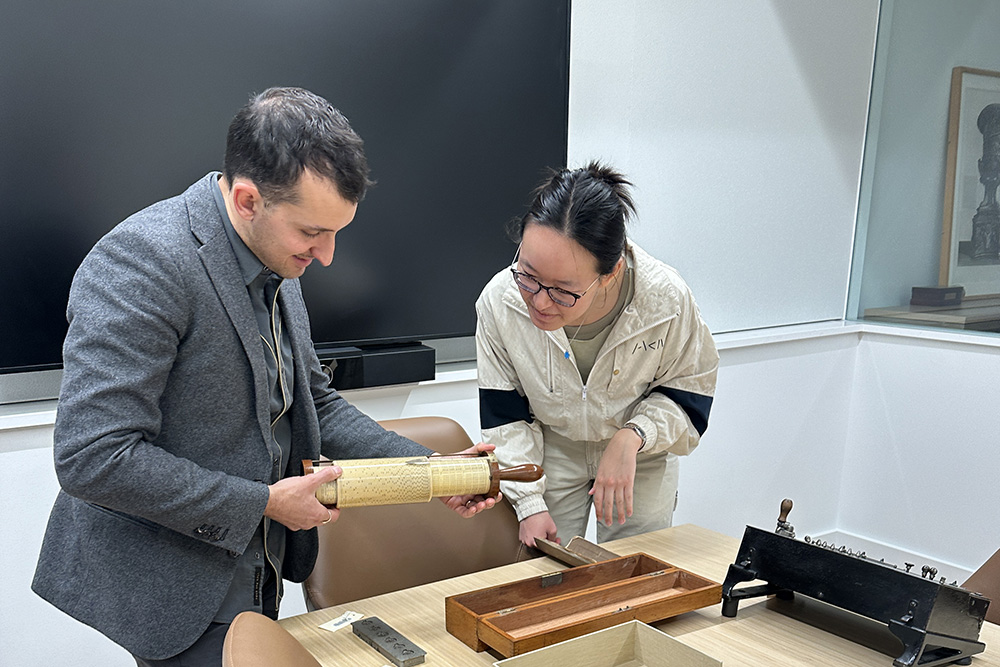
Leslie Liu, who holds an MS in Computational Design from the School of Architecture, spent a few weeks at the beginning of the summer working with the Libraries' Special Collections as the inaugural recipient of the Posner Fellowship for Creative Practice. This fellowship gives access to materials held by the Posner Center for Special Collections and the Hunt Institute for Botanical Documentation, including rare books, archival materials, early technologies, and botanical art.
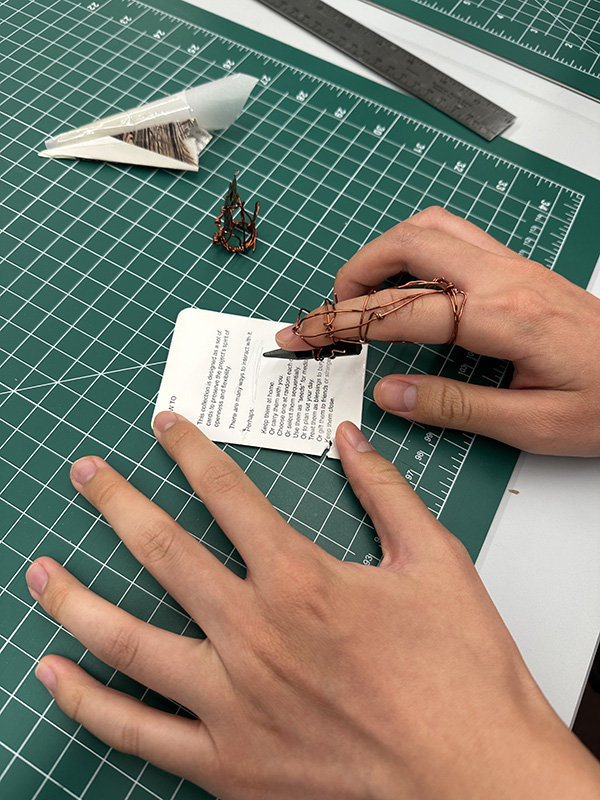
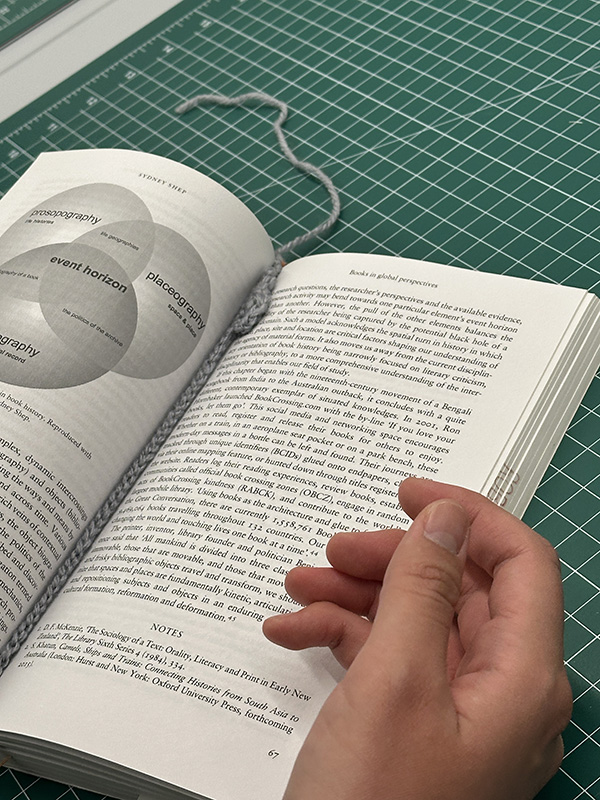
For her fellowship, Leslie is exploring the book as a sculptural and time-based medium — designing speculative reading prosthetics inspired by historical book objects in the collections. She'll also lead an upcoming public workshop, "Designing for Particular Readers," inviting the CMU community to prototype their own personal reading tools.
We asked Leslie a few questions about herself and her plans for the summer.
1. What were you most excited about exploring in the Posner Center?
Posner’s collection of calculators and ciphers from the current exhibition have been a real hoot. What they remind me of is the significance of representation: materializing processes previously locked off in the computers’ minds. As more things are made explicit and abstracted, that affects how people engage with or call upon the previous mental processes involved.
2. How did your background prepare you for the work that you did this summer?
I’m a book designer at heart. I was trained as a graphic/digital designer during my undergrad education and at CMU took several IDeATe courses that have helped me feel more grounded in my scrappy prototyping process. I think rather than background, it’s more the wealth of generous people and websites who I can reach out to now that have aided me in my making.
3. Can you tell me a little about a project you have focused on?
I’m working on developing a hyperpersonalized “reading kit” to augment or intervene on different aspects of reading. To this end I’ve been testing out a remake of the medieval girdle book, where the book is attached to the reader via tucking it under their belt, back when we wore books! Remaking this historical form is helpful because it’ll help me consider how I might want to wear or hold the reading kit. A great reminder has been that there have been several pioneers in garments/fashion such as Issey Miyake and Marithé + François Girbaud whose work I can draw from. Another consistent topic that has emerged from this research is the intertwined relationship between technology (here, clothing) and power, force, or militaristic ends. An example is the influence of gear in techwear — which Avery Trufelman’s “Articles of Interest” series further illuminated for me. These dynamics play out, too, at the university scale.
4. How does your creative process work?
A cycle of scrolling phone to see what people are making, heads-down making and testing, and then talking about it to/at myself online. I use websites like Are.na and Figma to gather assorted references, though much of the ideation and testing happens in my paper sketchbooks. Talking about it with friends and folk who are not in my immediate fields is also very helpful. The goal is to spread out my influences such that I can make unusual and/or novel lateral connections. For example, some influences include childhood paper-based MMORPGs, sewist habits, the cool stuff that the Center for Creative Reuse has on offer, e-textile artists and researchers, art books, and DIY gaming setups.
5. Have you found anything that surprised or intrigued you that you didn't expect?
A curious thread from the calculator collection is the influence of adjacent technologies: timekeeping via clocks, persistence of the book and the writing stylus, and fiber arts — as well as their accompanying metaphors as they have grown compact/miniaturized and influenced our everyday technologies in the 21st century. A wonderful surprise and consequence has been that the collection’s helped me expand my own definition of what a technology is, and reflect on the affordances, constraints, and prescribed use of contemporary tech, too.